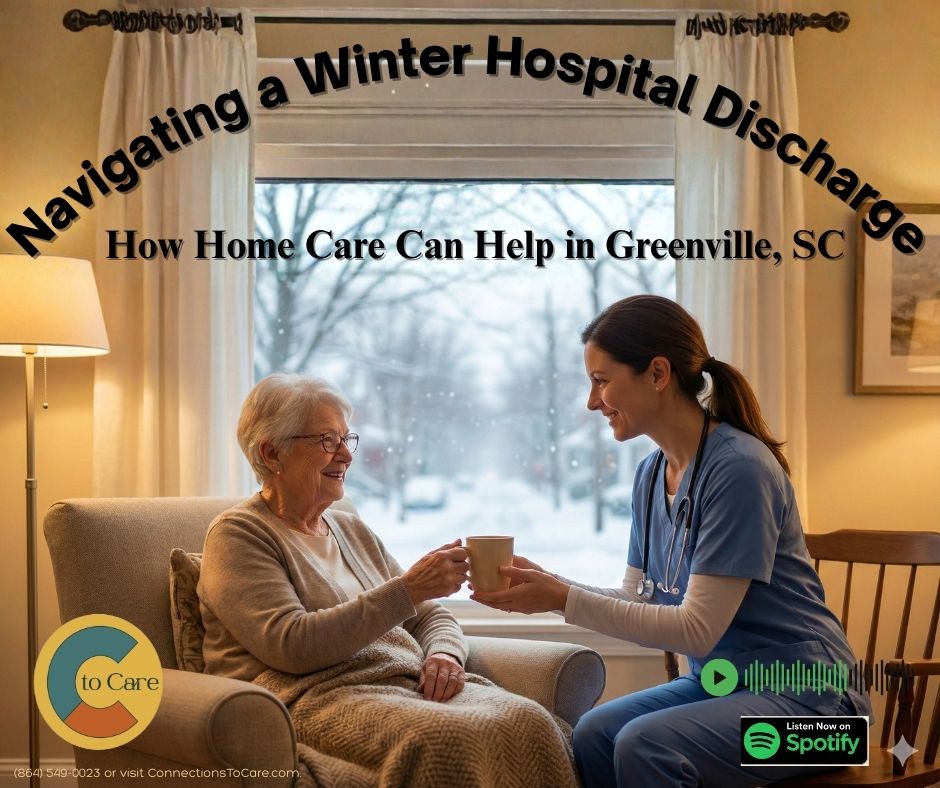
Navigating a Winter Hospital Discharge: How Home Care Can Help in Greenville, SC

Navigating a Winter Hospital Discharge: How Home Care Can Help in Greenville, SC
The call comes when you least expect it. Your mom is being discharged from Prisma Health Greenville Memorial. Tomorrow. And suddenly you're wondering: Is the house ready? Who will help her shower? What about those stairs?
If you've ever received that call during the winter months, you know the unique pressure it brings. Between navigating icy walkways, managing increased risks of respiratory illness, and coordinating post-hospital care, winter discharges from Greenville area hospitals present challenges that summer recoveries simply don't face.
Why Winter Hospital Discharges Are More Complex
Winter places severe demands on healthcare systems due to increased respiratory and cardiovascular illnesses, which means hospitals across the Upstate are often operating at capacity. This translates to shorter hospital stays and patients being discharged with greater care needs than in previous decades.
Research shows that social support is crucial for recovery from hospitalization, and limitations to social activities are felt almost immediately due to decreased functional ability after discharge. For Greenville seniors leaving Prisma Health, St. Francis, or Bon Secours facilities, the transition home during the winter months requires careful planning.
The psychological impact shouldn't be underestimated either. Many older adults experience isolation after returning home, particularly during cold weather when outdoor activities become more challenging. The combination of physical recovery needs and emotional adjustment creates a perfect storm that proper home care can help address.
The Reality of Post-Hospital Care in Greenville
Here in the Upstate, we're fortunate to have nationally recognized hospitals. Prisma Health Greenville Memorial has earned recognition for Patient Safety Excellence and consistently high patient satisfaction ratings. But even with excellent hospital care, the transition home remains one of the most vulnerable moments in a senior's healthcare journey.
The discharge process itself has become increasingly compressed. Where patients once stayed for observation and gradual recovery, today's healthcare environment emphasizes rapid discharge with care continuing at home. This shift means families must quickly arrange services, equipment, and support systems that were previously managed within the hospital setting.
What Makes Winter Discharges Particularly Challenging
Weather-Related Barriers: Those beautiful Blue Ridge Mountain views come with a price in winter. Icy driveways, slippery front steps, and cold temperatures make even short trips to the mailbox treacherous for someone recovering from surgery or illness.
Increased Illness Exposure: Cold and flu season means your recovering loved one is at higher risk for complications. Managing visitors, maintaining proper hygiene, and preventing secondary infections becomes critical.
Seasonal Isolation: Shorter days and colder weather naturally lead to reduced social interaction. For someone already dealing with post-hospitalization depression or anxiety, winter compounds the challenge.
Home Readiness: Is the heat working properly? Are pathways clear? Can medications be picked up safely? These logistical questions become urgent when your loved one is being discharged into winter conditions.
How Home Care Makes a Difference
This is where professional home care services become not just helpful, but essential. Companies throughout Greenville offer services specifically designed to bridge the gap between hospital and full recovery.
Immediate Post-Discharge Support: Many Greenville home care providers, including Right at Home, Visiting Angels, and Comfort Keepers, can arrange care quickly, sometimes within 24 hours. This means your loved one won't face those critical first days alone.
Medication Management: One of the most common reasons for hospital readmission is the occurrence of medication errors. Professional caregivers ensure medications are taken correctly and on schedule, reducing this risk significantly.
Fall Prevention: With icy conditions outside and potential weakness from hospitalization, fall risk skyrockets. Trained caregivers provide mobility assistance and help identify home hazards that could lead to another emergency.
Monitoring and Communication: Professional caregivers serve as your eyes and ears, watching for concerning symptoms and communicating changes to healthcare providers before small issues become emergencies.
The Connections to Care Advantage
At Connections to Care, we understand that every discharge situation is unique. We work with families throughout the Greenville area to create customized plans that address both the medical and emotional needs of recovery.
Our approach recognizes what research has long confirmed: successful recovery requires more than just physical care. It requires understanding each person's story, their values, and their goals for life after hospitalization. As Atul Gawande writes in "Being Mortal," true care honors autonomy and purpose, not just safety.
We coordinate with all major Greenville healthcare systems and have established relationships with discharge planners at Prisma Health, St. Francis, and other area hospitals. This means we can step in quickly, understand the specific care plan, and ensure continuity from hospital to home.
Practical Steps for Winter Discharge Planning
If your loved one is in the hospital now or facing an upcoming procedure, here's what you should do:
Before Discharge:
Request a family meeting with the discharge planner at least 48 hours before anticipated release
Ask specific questions about mobility restrictions, wound care, and medication schedules
Tour the home with fresh eyes, looking for winter-specific hazards
Contact home care agencies early to discuss availability and services
For the First Week Home:
Arrange for daily visits or around-the-clock care if needed
Keep a detailed log of medications, symptoms, and concerns
Ensure emergency contacts are posted visibly throughout the home
Schedule follow-up appointments before leaving the hospital
Winter-Specific Preparations:
Arrange for driveway and walkway clearing services
Ensure the heating system is functioning properly
Stock the home with non-perishable foods and medications before discharge
Consider temporary installation of grab bars near entrances
The Bottom Line
Winter hospital discharges in Greenville don't have to be overwhelming. With proper planning and the right home care support, your loved one can transition safely home and focus on what matters most: recovery and reconnection with the life they love.
The difference between a successful discharge and a readmission often comes down to those first critical weeks. Professional home care provides the bridge that gets your family through that vulnerable period and sets the stage for long-term wellness.
Need help navigating a hospital discharge this winter? Connections to Care is here to support Greenville families through every step of the process. Call us at (864) 549-0023 or visit www.ConnectionsToCare.com to learn how we can help your family.
Remember: You don't have to figure this out alone. We're your neighbors, and we're here to help.
