
Supporting Dementia Caregivers in Upstate SC
Dementia Care, Caregivers, Upstate South Carolina
The Second Patient No One Is Watching: What Teepa Snow Wants Upstate Caregivers to Hear
A plain‑spoken look at the “second patient” in dementia care—the caregiver—and the concrete supports available across the Upstate so you don’t have to do this alone.
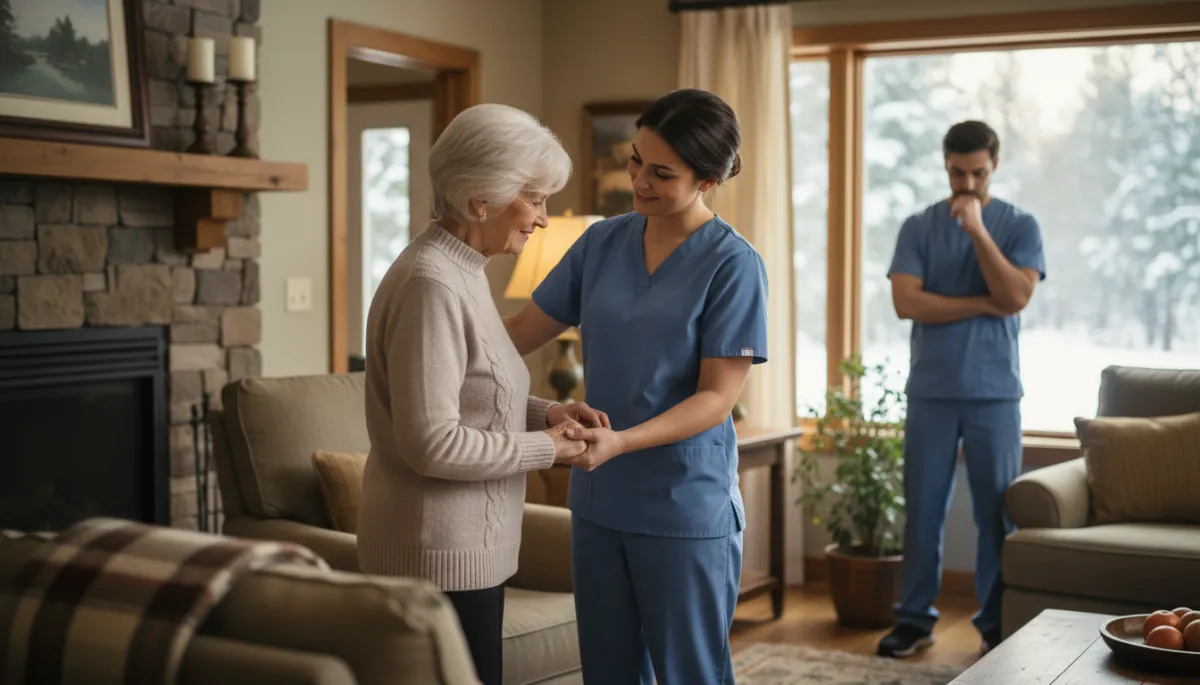
The Second Patient No One Is Watching
Why your health matters as much as the person you care for
There’s a line from dementia care expert Teepa Snow that stops people cold. She’s talking about the spouse or adult child who insists on doing it all alone, and she says: if you go first, all that hard work you’ve done for him, no one knows it. No one knows what you’ve done. No one knows him. And now he’s somewhere he can’t tell us much about himself, and we’re walking in blind, trying to pick up puzzle pieces scattered everywhere.
If you are the one holding your family together right now, that sentence probably landed somewhere in your chest. As someone who spends days optimizing complex systems, I hear it the way I’d hear a production outage warning: this is not hypothetical risk. This is a known failure mode, and it is preventable if we treat the caregiver as a critical part of the system—not an infinite resource.
The number behind Teepa’s warning: 63% is not “a little tired”
For decades, researchers have known that caregiving carries a physical price. The Caregiver Health Effects Study found that elderly spousal caregivers who reported strain had roughly a 63% higher mortality risk over a four‑year period than non‑caregivers of the same age. Sixty‑three percent is not a rounding error; it’s the kind of number that, in software, would have us calling an emergency review and freezing all new deployments until we understood the root cause.
Teepa Snow adds an important nuance: not all of those outcomes are deaths. Many are disabilities. The caregiver has a stroke. The caregiver has a heart attack. The caregiver develops a back injury or a serious depression and can no longer continue in the role at all. From the perspective of the person living with dementia, the result is often the same: the one person who knew their routines, their history, their preferences, and their warning signs is suddenly gone from the picture. A crisis placement follows. Nobody planned it. Nobody chose it.
📌 Key Takeaway: In engineering terms, the caregiver is not an optional add‑on. They are core infrastructure. If that infrastructure fails, everything downstream has to be rebuilt under crisis conditions.
Teepa’s two groups of caregivers—and why support changes the outcome
Here is the part of the conversation that matters most for Upstate families. Teepa wonders aloud what would happen if you separated caregivers into two groups. In one group: the people who did it alone, who never got training, never built knowledge, never built skills. They did it purely out of love and loyalty, and they did it by themselves. In the other group: the people who actively sought out information, education, and support.
Would the numbers look different? In her 45‑plus years of experience, she believes they would. And that reframes the entire problem. The danger may not be caregiving itself. The danger is unsupported, unskilled, isolated caregiving. That distinction should give you hope, because the second group is a group you can join. Today. The same way we upskill a junior engineer with documentation, mentorship, and tooling, caregivers can upskill too—and the “system” runs more safely when they do.
💡 Pro Tip: Think of support and education as your personal monitoring and alerting stack. They don’t remove the load, but they keep you from being blindsided by it.
The martyr trap: when two people go down instead of one
Most of us have met the caregiver Teepa describes: “Nobody takes care of him like I do. I’ll be up 24/7. I’ll lie down in front of the door so he has to step over me to leave.” That devotion is real and it deserves respect. But as she puts it, the way it’s being done means two people are going down instead of one.
We see this pattern constantly in Greenville, Spartanburg, and Anderson counties. A daughter cuts her hours at work, then leaves the job entirely. A husband stops going to his own doctor because appointments are hard to coordinate. Church attendance drops off. The Sunday lunch tradition ends. Friendships thin out. Six months later, nobody outside the household has any idea how bad things have gotten. Isolation isn’t a side effect of caregiving. It’s the mechanism by which caregiving becomes dangerous.
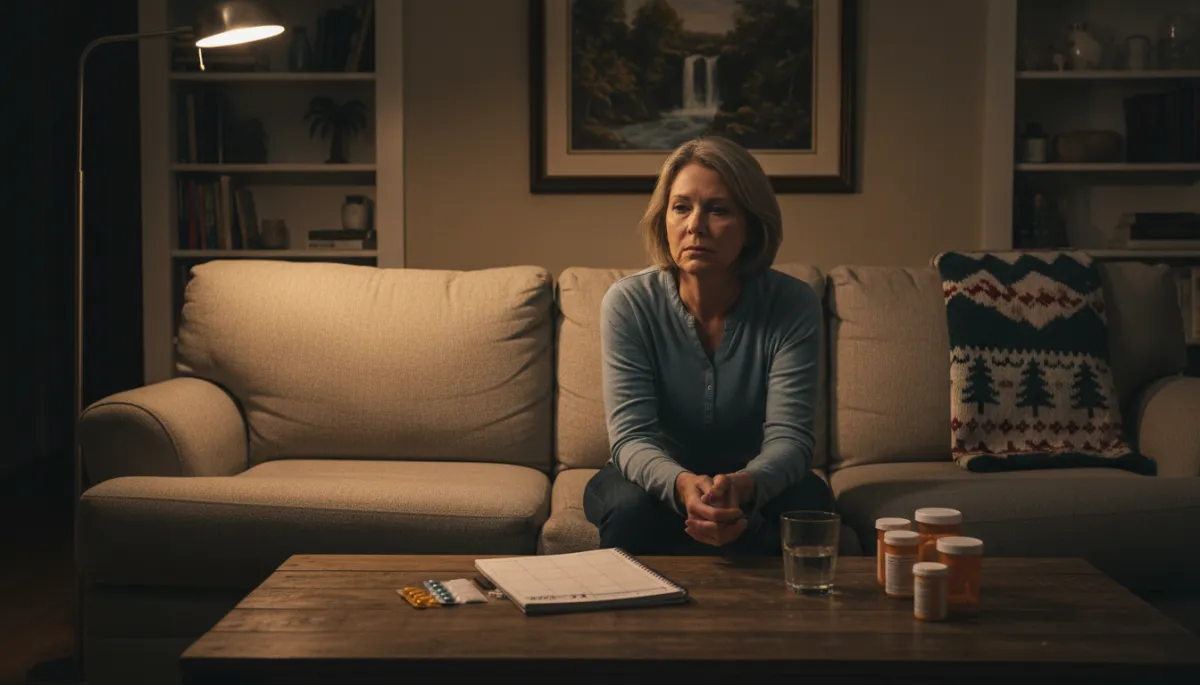
When caregiving isolates you, risk quietly climbs for both you and your person.
What “getting help” actually looks like in the Upstate
Teepa says something practical about the moment before the breaking point: know how to get help and where to get it before you’re on your last thread. She also recommends learning to breathe, specifically box breathing, and notes that people tend to dismiss it. Don’t. A four‑count in, four‑count hold, four‑count out, four‑count hold buys you the pause you need to respond instead of react.
# Simple “self-care check” pseudo-code for caregivers

def caregiver_check_in(energy, mood, support_calls_this_week):
    if energy == "empty" or mood == "overwhelmed":
        return "Pause and do 4x4 box breathing now."

    if support_calls_this_week == 0:
        return "Schedule one support group or helpline call."

    return "You are holding. Recheck in 24 hours."

# Example usage:
status = caregiver_check_in("empty", "overwhelmed", 0)
print(status)  # > Pause and do 4x4 box breathing now.
But breathing alone isn’t a care plan. Here’s what’s available around the Upstate right now, and how it maps to Teepa’s emphasis on skills, support, and connection.
1. Education and skills: building a safer “care stack”
Positive Approach to Care® (PAC), Teepa Snow’s organization, keeps a free resource library, a free monthly online dementia journal, and a free monthly “Ask Teepa Anything” broadcast. Her Hand‑under‑Hand® technique and visual, verbal, and touch cueing methods are learnable, and research shows they can reduce resistive behaviors and increase participation from people living with dementia (teepasnow.com).
The Alzheimer’s Association South Carolina Chapter adds another layer: free education programs (in‑person and virtual), on‑demand learning, and tools like ALZNavigator™ to help you plan each phase of the journey (alz.org). Their 24/7 Helpline at 800‑272‑3900 gives you a human to talk to at any hour when you hit a wall or need immediate guidance (alz.org).
2. Local support groups: the opposite of isolation
Both the Alzheimer’s Association and area churches host caregiver support groups across Greenville, Spartanburg, and Anderson. Sitting in a room with people who understand why you cried in the Ingles parking lot is not a luxury. It’s maintenance. As of 2026, the Alzheimer’s Association lists multiple Upstate in‑person groups—at places like Rolling Green Village and Hampton Park Baptist Church in Greenville, Summit Place of Anderson in Anderson, and Joy Lutheran Church in Moore—with trained facilitators and, in some cases, help arranging in‑home sitters if you call two weeks ahead (alz.org).
3. Respite and daily living support: taking tasks off your plate
Meals on Wheels of Greenville can take one recurring task off your plate. Senior Action offers programming and connection. Adult day programs give you a genuine block of hours to rest, work, or simply think. Your local Area Agency on Aging, through Upstate Aging Matters and the South Carolina Department on Aging’s Dementia Care Specialists, can help you find respite funding and dementia‑specific resources you may not know exist (aging.sc.gov).
4. Your own health, movement, and daylight
If you have delayed a screening, a follow‑up, or a mental health appointment, put it back on the calendar at Prisma Health or Bon Secours St. Francis this month. You are the infrastructure. Infrastructure requires maintenance. And don’t underestimate the physiology: twenty minutes on the Swamp Rabbit Trail, a loop through Falls Park, or a walk at Cleveland Park in Spartanburg does more for caregiver stress than most people expect.
Where an Aging Life Care Manager fits in the picture
Teepa closes that conversation with a challenge to professionals: somebody needs to raise their hand and say, don’t let this happen again. Somebody needs to help families find connections. That’s the work. An Aging Life Care Manager, sometimes called a geriatric care manager, is a credentialed professional who assesses your family’s whole situation and builds a plan around it—medical picture, home environment, finances, family dynamics, and the caregiver’s own capacity.
Practically, it looks like this. We identify what is actually causing the hardest moments in your day. We connect you to the right local resources instead of leaving you to search alone at midnight. We coordinate between physicians, home care agencies, and facilities so that information doesn’t fall through the cracks. We help you document what you know about your person, so that knowledge isn’t locked in one exhausted head. And when a hard decision is coming, we help the family have that conversation before it becomes an emergency. Aging Life Care Professionals are held to the standards of the Aging Life Care Association, which sets the highest bar in private care management.
💡 Pro Tip: Think of an Aging Life Care Manager as a senior systems architect for your family’s care plan—someone who sees the whole architecture and keeps it from collapsing under load.
One honest question for the “second patient”
Ask yourself: if you were out of commission for two weeks starting tomorrow, does anyone else know what your parent or spouse needs? The medications, the sundowning pattern, the foods that work, the phrase that calms them down, the name of the neurologist? If the answer is no, that’s not a character flaw. That’s a plan that hasn’t been built yet—and plans can be built.
Please don’t do this alone. Please don’t think you have to. The data are clear that unsupported caregiving carries a dangerous physical price. Teepa Snow’s decades of experience are just as clear that support, skills, and connection change the trajectory—for you and for the person you love.
Connections to Care serves families across Greenville, Spartanburg, and Anderson counties with professional Aging Life Care Management. If you’re not sure what you need yet, that’s exactly the right time to call.
(864) 549‑0023 | [email protected] | ConnectionsToCare.com
