Is Your Greenville Home Dementia-Safe This Winter? Key Tips for Families for connection to care

Is Your Greenville Home Dementia-Safe This Winter? Key Tips for Families
Winter in the Upstate brings its own unique challenges—unpredictable weather, early sunsets, and the transition from our mild falls to genuinely cold days. For families caring for a loved one with dementia in Greenville, these seasonal changes require thoughtful preparation to keep home environments safe and comfortable.
Why Winter Poses Special Risks for People with Dementia
Dementia affects how individuals perceive and respond to their environment. Temperature regulation becomes difficult, spatial awareness declines, and the combination of darker evenings and unfamiliar winter routines can increase confusion and anxiety. According to dementia care expert Teepa Snow, creating consistent, predictable environments is essential for reducing distress and maintaining independence.
In the Upstate, where we might experience 70-degree days followed by ice storms within the same week, this inconsistency itself becomes a safety concern. Let's look at specific steps you can take to prepare your Greenville home for the season ahead.
Temperature Control and Heating Safety
Set Thermostats to a Consistent Range
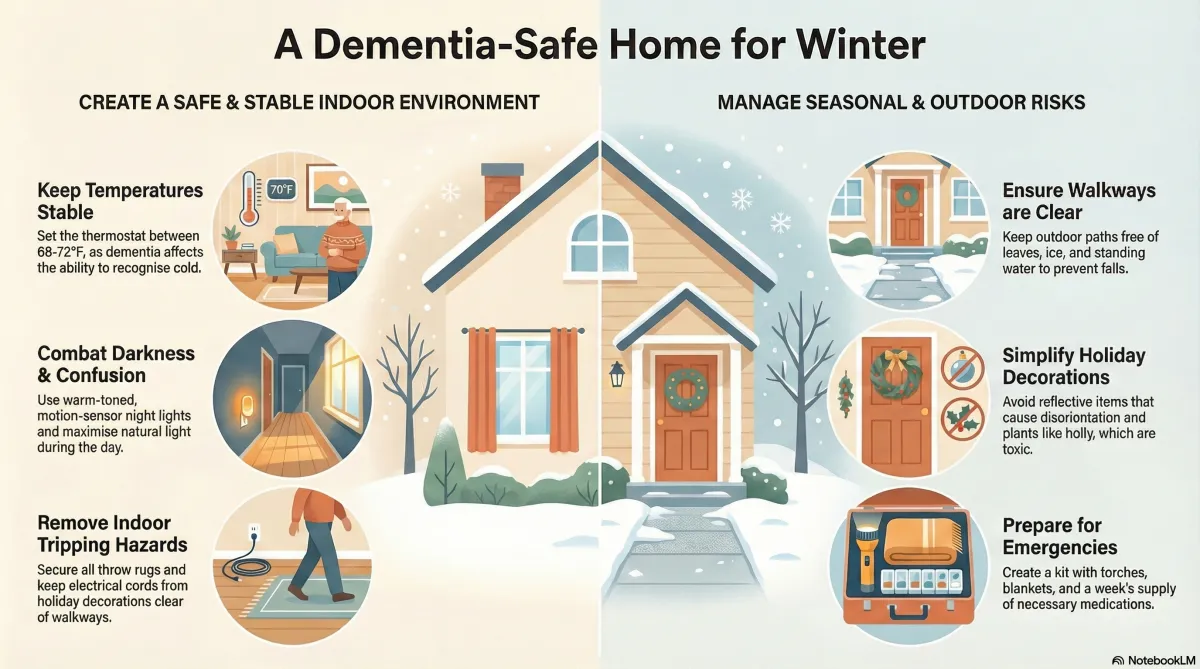
Keep your home between 68-72°F consistently. People with dementia often lose the ability to recognize when they're too cold or too hot. Consider installing a lockable thermostat cover to prevent adjustments that could create dangerous temperature swings.
Eliminate Space Heater Risks
If you use space heaters, choose models with automatic shut-off features and tip-over protection. Place them in open areas away from curtains, furniture, and high-traffic paths. Better yet, ensure your central heating system is serviced before winter arrives—many Greenville HVAC companies offer senior discounts for preventive maintenance.
Layer Clothing, Not Blankets
Heavy blankets can pose fall risks at night. Instead, dress your loved one in layers—thermal underwear, comfortable sweaters, and warm socks. This approach maintains warmth without creating tripping hazards.
Lighting: Combat Sundowning and Reduce Falls
The shorter days of winter often trigger "sundowning"—increased agitation and confusion in late afternoon and evening. Strategic lighting can make a significant difference.
Install Motion-Sensor Night Lights
Place these in hallways, bathrooms, and bedrooms. Choose warm-toned bulbs rather than harsh white lights, which can be disorienting. The Lowe's and Home Depot locations throughout Greenville carry affordable options specifically designed for senior safety.
Maximize Natural Light During the Day
Open curtains and blinds during daylight hours. Our Upstate winters may be gray, but every bit of natural light helps maintain circadian rhythms and reduce confusion.
Create Consistent Evening Routines
Turn on lights before sunset—typically around 5:30 PM in December and January here in Greenville. This gradual transition is less jarring than sudden darkness.
Fall Prevention in Winter Conditions
Falls are the leading cause of injury among seniors, and winter conditions amplify these risks both indoors and out.
Entrance and Walkway Safety
Keep pathways clear of leaves, ice, and standing water. Apply non-slip treads to outdoor steps. If your loved one insists on going outside during icy conditions, redirect them to safer indoor activities rather than trying to physically restrain them—Teepa Snow's Positive Approach to Care emphasizes validation and redirection over confrontation.
Indoor Floor Hazards
Remove throw rugs or secure them with non-slip backing. Ensure electrical cords from holiday decorations don't cross walkways. Consider the traffic patterns in your home—people with dementia tend to pace or wander, so create clear, obstacle-free paths.
Bathroom Modifications
Install grab bars near toilets and in showers. Use non-slip mats both inside and outside the tub or shower. Consider a shower chair if balance is becoming an issue.
Managing Holiday Decorations Safely
The holidays can bring joy, but they also introduce new hazards and potential confusion.
Simplify Decorations
Avoid decorations that create tripping hazards or visual confusion. Shiny ornaments, mirrors, and reflective surfaces can cause disorientation. Stick with familiar, simple decorations your loved one will recognize from past years.
Electrical Safety
Test all light strings before use. Avoid overloading outlets. Consider battery-operated candles instead of real flames—they provide ambiance without fire risk.
Avoid Toxic Plants
Holly, mistletoe, and poinsettias can be toxic if ingested. People with advanced dementia may not remember that plants aren't food.
Kitchen and Appliance Safety
Disable or Monitor Stove Use
Consider installing stove knob covers or an automatic shut-off device. Many families in the Greenville area have found success with induction cooktops that only heat when a pot is present, though the transition to new appliances should be approached carefully.
Prevent Scalding
Set water heater temperatures to 120°F or lower. Install anti-scald devices on faucets, especially in bathrooms.
Organize for Independence
Keep frequently used items within easy reach. Label cabinets with pictures if helpful. The goal, as Dr. Atul Gawande emphasizes in his work on aging and autonomy, is to maintain dignity and independence while ensuring safety.
Preparing for Emergencies
Winter weather in the Upstate can be unpredictable. Power outages and ice storms aren't uncommon.
Create an Emergency Kit
Include flashlights, batteries, blankets, non-perishable food, and a week's supply of medications. Keep a printed list of emergency contacts—don't rely solely on cell phones, which may lose power.
Establish a Check-In System
Arrange for daily check-ins with neighbors, family members, or a local care service. Connections to Care offers care management services throughout Greenville and can help coordinate support systems.
Consider Medical Alert Systems
Modern systems go beyond the traditional necklace buttons. GPS-enabled devices can alert caregivers if a loved one wanders outside in winter weather.
When to Seek Professional Support
Caring for someone with dementia is demanding work, and winter's challenges can push family caregivers to their limits. There's no shame in asking for help.
Professional Aging Life Care Managers can assess your home, identify risks you might have missed, and coordinate services ranging from home modifications to respite care. Organizations certified by the Aging Life Care Association (ALCA) adhere to the highest standards in the industry.
Local non-medical home care agencies can provide companionship during the darkest months, help with meal preparation, and offer the watchful presence that allows family caregivers to rest.
A Practical Checklist for Greenville Families
Before winter fully arrives, walk through your home with these questions:
Is the temperature consistent in all rooms?
Are all walkways—inside and out—clear and well-lit?
Have I removed or secured all tripping hazards?
Are medications properly organized and secured?
Is the water heater set to a safe temperature?
Do I have working smoke and carbon monoxide detectors?
Is there a clear plan for emergencies?
Finding Balance: Safety and Quality of Life
The goal isn't to create a hospital-like environment. As geriatrician Louise Aronson reminds us, older adults—including those with dementia—deserve to experience life, not merely exist in bubble-wrapped safety.
The best dementia-safe home feels like home: familiar, comfortable, and filled with meaningful routines. You're simply removing the obstacles that prevent your loved one from navigating their space confidently.
This winter, take time to assess, adjust, and ask for help when needed. The Greenville community offers resources, and you don't have to navigate this journey alone.
Need help creating a safer home environment for your loved one?
Connections to Care serves families throughout the Greenville area with personalized aging life care management. Call (864) 549-0023 or visit ConnectionsToCare.com to learn how we can support your family this winter and beyond.
